
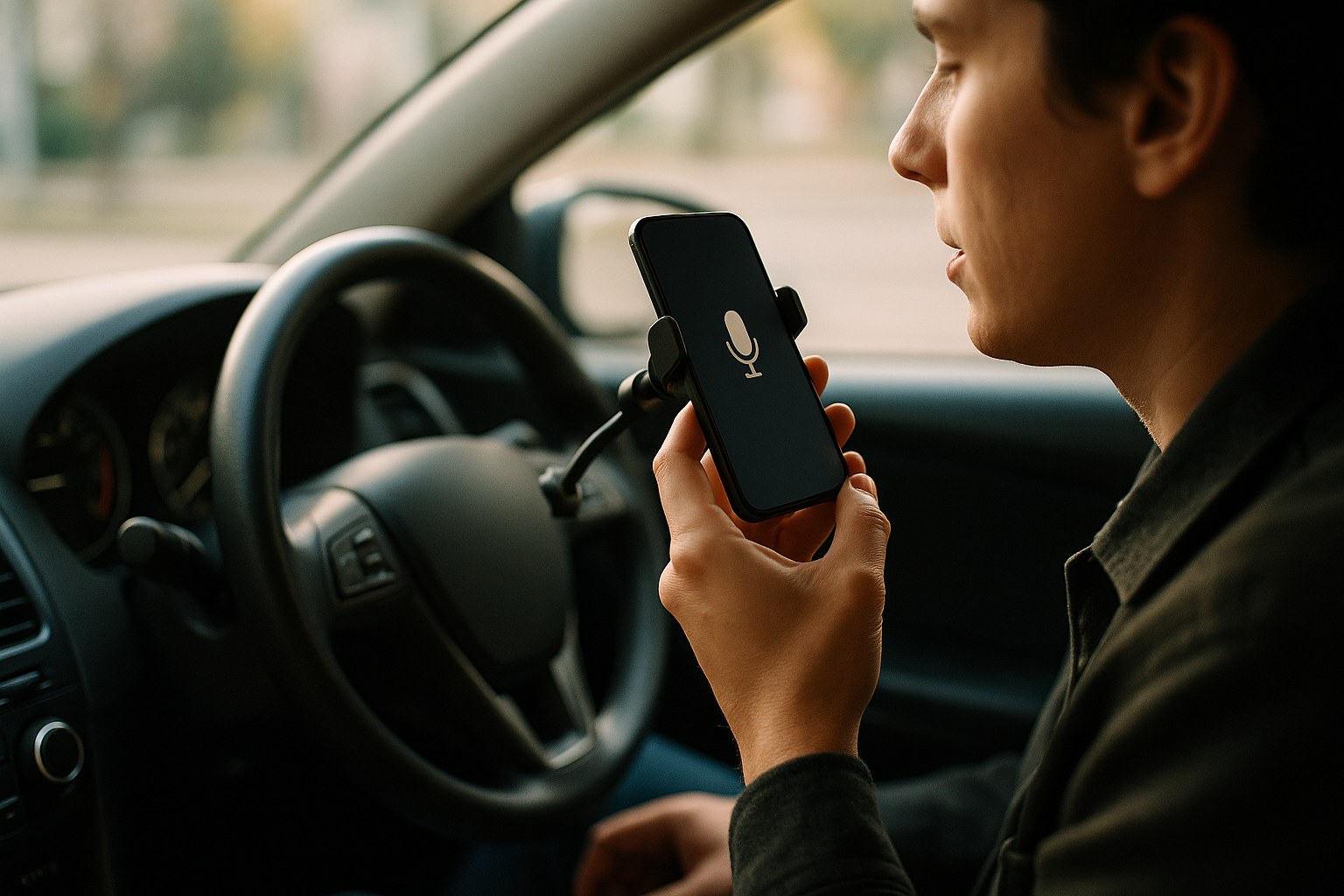
A potential client is driving home after a crash or searching at 11 p.m. when an urgent family issue can’t wait until morning. They don’t type a perfect keyword string—they ask a device a full question, and the winners are the firms that turn that spoken moment into measurable actions like phone calls, direction requests, and consultation bookings.
If you’re asking how can law firms optimize their websites for voice search and local leads, the practical answer starts with intent: voice assistants and local results tend to reward clear local signals and short, extractable answers that match what the searcher wants to do next. This is marketing guidance only, not legal advice; outcomes vary by jurisdiction, competition, and the facts of each matter.
Start With Search Intent: How Legal Clients Use Voice Search
Voice search in legal is less about novelty and more about urgency, convenience, and location. Spoken queries are typically longer, more conversational, and packed with “near me,” city names, “open now,” and “call” intent—signals that the searcher wants a fast next step, not a deep research session.
Typed searches often compress meaning (“Phoenix DUI lawyer”), while voice expands it into a scenario (“Who can help with a DUI in Phoenix tonight and how do I schedule a consultation?”). Your website should be built so search engines can confidently match your firm to that scenario and then make the conversion path frictionless—especially on mobile.
Example query across practice areas: “Who is a personal injury lawyer near me that can help after a rear-end crash?” The searcher typically wants immediate validation (do I have a case), a way to contact you now (click-to-call), and proof of local fit (service area, office location, reviews). This is where location signals and on-page answers work together with local seo for lawyers to influence which firms are even eligible to show up prominently.
Example query across practice areas: “Can I file for divorce in [city] without going to court, and how much does it cost?” The searcher usually wants a concise, plain-English starting point, jurisdiction-aware qualifiers, and a clear next action (book a consultation). To meet that intent, publish pages that put the exact question in a heading, answer it directly in the first paragraph, then expand carefully with context and a call-to-action—an approach that pairs well with law firm topic clusters and pillar pages seo for broader coverage without diluting clarity.
For most firms, “voice optimization” is really “local eligibility plus answer extraction.” If your site architecture, local details, and content formatting make it easy for systems to identify your practice area, location, and best next step, you improve the odds of appearing in local surfaces and earning visits that convert—especially when those pages are supported by technical seo for law firms that keeps the experience fast, stable, and crawlable.
Create Mobile-First, Voice-Friendly Pages That Drive More Leads
When someone uses voice to find an attorney, the “win” usually isn’t a single spoken answer—it’s getting surfaced in local results and earning a fast, confident next step: a call, a directions tap, or a consultation request. To support that path, build pages that load cleanly on mobile, present clear local signals, and answer common intake questions in language a search engine can extract without guessing.
Prioritize the page types that most often become the landing point from “near me” discovery: (1) service + location pages (practice area + city/region), (2) attorney bios that confirm credibility and jurisdiction fit, and (3) a contact/location page that makes calling and directions effortless. Across all of them, aim for scannable headings, large tap targets, readable typography, and one primary action above the fold so a voice-driven visitor can convert in seconds, not minutes.
- Make the first screen decisive on mobile: show your intake phone number, a clear practice-area statement, and one primary conversion action (call or request a consultation), with no competing choices.
- Write “extractable” answers: use question-style headings that match how clients speak, then answer immediately in plain English before adding nuance and jurisdiction qualifiers.
- Reinforce local trust fast: confirm your service area, office access (parking/building details), and a small amount of proof (reviews, recognitions, case types handled) without burying the lead.
- Keep the path to contact consistent: the same phone number, hours, and address formatting should appear sitewide so search engines and clients don’t see conflicting information.
- Measure what matters: track calls, form submissions, and direction requests so “voice readiness” is tied to lead outcomes, not vanity metrics.
Service + Location Pages: Essential On-Page Elements for Local Leads
Your service + location pages do the heavy lifting for “near me” and city-modified voice queries because they connect a specific need to a specific place. Treat each page as an intake-ready landing experience: the opening should confirm the service and geography in one sentence, then immediately present a tap-to-call option and a single primary conversion (call now or request a consultation) above the fold. Directly beneath that, state your full name, address, and phone number in a consistent format, list current office hours (including any after-hours intake policy if applicable), and provide a one-tap directions pathway with an embedded map so visitors can act without hunting.
Next, add short sections that a voice-driven prospect implicitly wants answered: what cases you handle in that category, what happens after the first call (conflict check, documents to gather, typical timelines), and what to expect about pricing structure (for example, “contingency may apply in injury matters” or “some matters start with an initial consultation fee”), keeping the language informational and non-promissory. Include a brief service-area note that matches how people talk (“serving clients across Phoenix and the surrounding East Valley”), and reinforce trust with one compact proof block—high-level review sentiment, notable affiliations, or recognitions—without turning the page into an awards wall. If you’re building out this page type at scale, align it with a broader mobile seo for law firms plan so performance and conversions stay consistent across every location you target.
Finally, tighten the page for voice and local eligibility by making it easy for search engines to reconcile your identity: keep NAP consistent with your footer and major listings, avoid swapping phone numbers without tracking strategy, and ensure the content on the page matches what you mark up (no hidden FAQs, no markup for text that isn’t visible). If your team is unsure which elements are actually moving calls and consultations, a structured review of page templates and intake tracking through a seo consulting roi for law firms lens can help you prioritize changes that affect lead volume rather than just rankings.
Use Structured Data to Boost Trust and Accuracy in Search Results
Structured data (often called “schema”) helps search engines interpret who you are, what you offer, and where you operate—so your firm’s local details and on-page answers are less likely to be misread or mixed up with another entity. For voice-driven discovery, that clarity matters because assistants and local surfaces frequently summarize results, pull business details into cards, or extract short passages that can influence calls, directions, and consultation requests.
What schema can do is reduce ambiguity and improve eligibility for rich results and cleaner local presentation; what it can’t do is guarantee a “single spoken answer” outcome or override weak local fundamentals. Treat it as a trust-and-precision layer that complements accurate NAP, well-built practice/location pages, and conversion-ready mobile UX. When you’re aligning these pieces as part of local SEO for lawyers, schema is most valuable when it matches the exact content users can see and the exact business facts you publish everywhere else.
For most law firm sites, the highest-impact starting point is entity schema (LegalService/Attorney/LocalBusiness) plus FAQPage on pages that genuinely contain Q&A content. This combination supports both local understanding (name, address, phone, hours, service area) and answer extraction (the questions people actually ask out loud), which directly ties back to the long-tail intent behind “how can law firms optimize their websites for voice search and local leads.”
JSON-LD Samples: LegalService/Attorney + FAQPage—and the Mistakes to Avoid
Below are compact JSON-LD patterns you can adapt. Place JSON-LD in the page HTML (commonly in the head or body) and keep it synchronized with the visible page content—especially your footer NAP and your location page header. If you’re working across multiple offices, use one distinct entity markup per location page so the address and phone remain unambiguous.
Sample 1: Entity markup (LegalService with an Attorney)
{ "@context":"", "@type":"LegalService", "name":"Example Law Firm, PLLC", "url":"/", "telephone":"+1-555-555-1212", "image":"", "address":{"@type":"PostalAddress","streetAddress":"123 Main St, Suite 400","addressLocality":"Phoenix","addressRegion":"AZ","postalCode":"85004","addressCountry":"US"}, "areaServed":[{"@type":"City","name":"Phoenix"},{"@type":"City","name":"Tempe"}], "openingHoursSpecification":[{"@type":"OpeningHoursSpecification","dayOfWeek":["Monday","Tuesday","Wednesday","Thursday","Friday"],"opens":"08:30","closes":"17:30"}], "priceRange":"$$$", "founder":{"@type":"Person","@id":" Smith","jobTitle":"Attorney"}, "employee":{"@type":"Attorney","@id":" Smith","url":"/"} }Sample 2: FAQPage markup (only for true on-page FAQs)
{ "@context":"", "@type":"FAQPage", "mainEntity":[ {"@type":"Question","name":"Do you offer same-day consultations?","acceptedAnswer":{"@type":"Answer","text":"In many cases, yes. Availability depends on attorney schedules and the urgency of the matter, so call to confirm the next open consultation time in your city."}}, {"@type":"Question","name":"How much does a consultation cost?","acceptedAnswer":{"@type":"Answer","text":"Consultation fees vary by practice area and jurisdiction. We will confirm pricing, what’s included, and any flat-fee or retainer options before you schedule."}}, {"@type":"Question","name":"Do you serve clients outside the city where your office is located?","acceptedAnswer":{"@type":"Answer","text":"Often, yes. Service area depends on the type of case and the courts or agencies involved; contact us with your location so we can confirm coverage."}} ] }Common mistakes that silently reduce impact: First, NAP mismatch—your firm name, address formatting, and phone number in schema must match your site footer and key citations, or you risk creating multiple “versions” of your business. Second, marking up hidden or non-existent FAQs—FAQPage should reflect questions and answers users can actually read on the page; if the FAQ content is gated, collapsed behind tabs that never load, or absent, you can lose eligibility. Third, using the wrong @type—many firms mark everything as LocalBusiness only; if you’re describing legal services and practitioners, use LegalService and Attorney where appropriate to reduce category ambiguity for legal-intent searches.
One more caution: review markup is often misused. Don’t add “AggregateRating” or “Review” structured data unless the ratings and reviews are displayed on that same page and represent your own first-party collection process; mixing third-party reviews or marking up testimonials that aren’t shown can create compliance problems and wasted effort. If you need a reliable implementation workflow, a technical audit through technical SEO for law firms can catch schema inconsistencies before they affect local lead attribution.
“Speakable” Schema: When It’s Worth Testing vs. When to Skip
“Speakable” markup is frequently discussed in voice SEO, but real-world support has been limited and can change by platform, region, and content type. In practice, most law firms will see more measurable gains by prioritizing clean entity schema plus FAQPage (and by writing extractable answers that stand alone in the first lines of each response) rather than investing heavily in Speakable as a primary lever.
It’s worth testing Speakable when you have a page with a clearly defined, public-facing “answer block” that you want assistants to read accurately—such as a location page section explaining hours, intake steps, and consultation logistics, or a carefully worded eligibility overview that avoids promises. It’s smart to skip when your page content is primarily marketing copy with no concise passages suitable for read-aloud, when the topic requires heavy jurisdiction-specific nuance that can’t be safely summarized, or when your conversion path is already constrained by mobile UX and tracking gaps (fix those first).
A safe experiment plan: implement Speakable on one high-intent page only, keep the speakable passages visible on-page, and log the exact before/after date. Monitor Search Console for changes in impressions and click-through rate on question-style queries, and separately monitor local lead metrics (calls, direction requests, consultation form submissions) to ensure the change is helping the intake funnel rather than just creating vanity visibility. If nothing moves after a reasonable observation window, roll back and reallocate effort to FAQ expansion, stronger location page elements, or authority building through link building for law firms.
Capture “Near Me” Leads With Google Business Profile and Consistent NAP
For voice-driven “near me” searches, your Google Business Profile (GBP) and your on-site NAP (name, address, phone) act like a single local identity record. When a voice assistant or local surface decides which businesses are eligible to show, it typically leans on the same fundamentals that power map visibility: accurate entity details, clear service relevance, and confidence that the listing matches the website. The practical goal isn’t to chase a “single spoken answer,” but to increase your eligibility for local results and then make the next action obvious: call, directions, or a consultation request.
Start by tightening entity accuracy across every place a client might compare you. Your firm name should match exactly across GBP, your website header/footer, and major citations; small differences (suite formatting, old numbers, alternate brand names) can cause split signals that weaken local prominence. Ensure your primary phone is consistent everywhere, and decide whether you will display one firm-wide intake number or location-specific numbers—then stick to that decision across GBP and your site’s location pages. If you operate multiple offices, keep each location’s NAP distinct and avoid duplicating phone numbers across listings unless your intake model requires it and the site clearly supports that structure.
GBP completeness matters most where it reduces ambiguity. Choose the closest primary category to your core intake focus (not a “nice to have” practice area), then add relevant secondary categories if they accurately reflect services you truly provide. Populate the Services section using the same practice-area naming that appears on your website’s primary pages, and align the “Appointment” or “Website” links to the most appropriate landing page for that intent (for example, the local office page or the practice-area page for that city). If you’re building a broader system for voice discovery and local lead capture, keep your on-site architecture consistent with your GBP taxonomy and your voice search law firm seo content approach.
Use GBP fields that help clients act immediately: accurate hours (including holiday hours), service areas where applicable, attributes that matter for intake (virtual consultations, accessibility), and high-quality photos that validate the location and build trust. For practitioner-heavy firms, add practitioner listings where appropriate so branded voice queries (attorney name + “near me” or “phone number”) route to the correct profile. Also monitor GBP Q&A: it often becomes a pre-intake layer, and unanswered questions can create confusion or invite unhelpful third-party answers.
Write service descriptions for spoken clarity: plain English, immediate relevance, and a clear next step—without promises or legal advice. Example service description that tends to work well in voice-driven contexts: “Personal injury consultations for car crashes and slip-and-fall claims in [City]. We can review what happened, explain next steps, and help you schedule a consultation by phone or online.” This wording is easy to extract, aligns with urgent intent, and stays marketing-safe by avoiding guarantees.
Track GBP Results: UTMs, Calls, Directions, and Intake Attribution
If you can’t measure it, you can’t improve it—especially for voice and local discovery where the user’s path often starts in maps, not on your homepage. Build tracking so you can separate GBP-driven sessions and conversions from other channels, then tie those outcomes back to your intake process. The win condition is simple: more qualified calls, more direction requests from the right service area, and more consultation bookings that your team can attribute to local surfaces.
Use UTM parameters on your GBP website and appointment links so analytics can label visits correctly. Keep UTMs consistent across locations and practice areas; inconsistent tagging makes reporting noisy and can hide what’s working. A sample UTM string you can add to a GBP website URL looks like this: ?utm_source=google&utm_medium=organic&utm_campaign=gbp&utm_content=location_main. Pair this with landing pages that match intent (practice + city) and a mobile-first conversion path; you can also validate that the destination supports click-to-call and fast contact flows in your mobile seo for law firms work.
Review performance inside GBP (calls, website clicks, direction requests) and compare it against what your analytics and CRM say happened after the click. The most reliable approach is to align three layers: GBP actions, on-site conversions (calls and forms), and intake outcomes (consultations scheduled, matters opened). If you use call tracking, keep it clean: use dynamic number insertion on-site to attribute sessions, but avoid swapping your primary NAP number in a way that creates mismatches between your site and citations.
Success looks like alignment, not vanity metrics. You want GBP actions rising alongside tangible intake indicators: calls that meet your screening criteria, direction requests that correlate with actual foot traffic (if in-person consults are offered), and form submissions that lead to booked consultations. When a practice area is underperforming in local results, improve the match between GBP Services and your on-site service naming, then reinforce the same topics with structured content and internal linking rather than random “SEO tweaks.” If you need help prioritizing the highest-impact changes, a dedicated seo consultant for lawyers boost your law firms online visibility and client leads assessment can map each fix to a measurable local-lead metric.
Review Signals That Boost Both Local Rankings and Conversions
Reviews influence two things at once: local visibility signals (prominence) and human decision-making at the exact moment someone is choosing who to call. For voice and local surfaces, review signals also serve as quick credibility shortcuts—especially when the user is in a hurry and scanning a small screen after asking a spoken question. Focus on ethical, sustainable review acquisition and fast, consistent responses that show you are active and attentive.
Aim for a steady cadence rather than chasing a specific number. Freshness and diversity help: reviews coming in over time, from different clients, reflecting different matters and outcomes without disclosing confidential details. Encourage clients to describe the service experience in practice-area language that future searchers actually say out loud—communication, responsiveness, clarity, and the type of issue—without scripting words or offering incentives. A helpful prompt is: “If you’re comfortable, share what we helped you with in general terms (for example, ‘car accident claim’ or ‘custody matter’) and what the experience was like.”
Respond to every review with a repeatable pattern: thank them, keep it general, avoid confirming representation, avoid discussing facts, and invite offline follow-up. Example response that protects confidentiality while still converting: “Thank you for taking the time to share your experience. Our team works hard to communicate clearly and guide people through stressful situations with respect and professionalism. If you ever have questions in the future, please call our office so we can help.” This response reinforces service quality without implying outcomes or revealing details.
Finally, use reviews as a feedback loop. If your GBP insights show high impressions but low calls, review content and responses can help bridge trust gaps—particularly for competitive “near me” queries. When you see consistent review themes (e.g., “quick call back,” “explained options,” “transparent fees”), mirror that language on your key local landing pages so voice-driven visitors get immediate validation before they tap to contact.
Maintain and Improve: Test, Measure, Refine (Skip the Voice Search Myths)
Voice-driven local lead generation is not a one-time “optimize and forget” project. Assistants, local surfaces, and SERP layouts change; your firm’s hours, intake process, and service emphasis change too. The goal is to keep your website and local entity signals eligible for strong local visibility while continuously improving the outcomes you can measure: calls, direction requests, and consultation bookings.
Skip the myths that imply you can engineer a single guaranteed spoken answer across every device. In practice, Google’s voice and local surfaces heavily reflect Google’s local ranking framework and Google Business Profile data, Siri commonly references Apple Maps data sources, and Alexa often aligns with Bing and Amazon-controlled experiences. You can’t control which assistant a prospect uses—or how any platform chooses to summarize an answer—but you can control the inputs that make your firm easy to match to local intent: consistent NAP, clear service-area and location signals, extractable on-page answers, fast mobile UX, and a frictionless “what happens next” path.
Build a lightweight cadence around what moves the needle: (1) local accuracy (NAP, hours, categories/services alignment), (2) on-page clarity (direct answers that reduce ambiguity), (3) conversion mechanics (tap-to-call, directions, short forms), and (4) measurement (separating local-surface traffic from other channels so you can defend what’s working). When you need to scale content updates without diluting quality, use a controlled workflow such as ai content generation for law firms to draft Q&A updates, then apply attorney review, jurisdiction qualifiers, and intake-focused edits before publishing.
Ongoing Voice + Local SEO Audit Checklist (Quick and Lightweight)
Use this checklist weekly or monthly for quick spot-checks, and do a deeper sweep quarterly. The point is to catch silent lead leaks early: a broken click-to-call link, an outdated holiday hour, a service page that answers the question but forgets to tell the person what to do next.
- Re-verify NAP consistency across your website footer, contact/location pages, Google Business Profile, and major citations (same spelling, suite format, and primary phone).
- Confirm click-to-call works sitewide on mobile (header number, sticky bar if used, and all call buttons) and that the correct intake line rings during business hours.
- Spot-check top service + location pages: the first screen should clarify eligibility at a high level, show local fit, and state the next step (call, request directions, or book a consultation) without forcing extra scrolling.
- Review Google Business Profile performance for calls, direction requests, and website visits; look for sudden drops that may indicate category edits, listing issues, or competitive pressure.
- Refresh photos and posts in GBP to keep the listing current and reduce uncertainty for “near me” and “open now” searchers.
- Skim GBP Q&A for accuracy, tone, and completeness; add short answers to recurring intake questions (consultation options, parking, after-hours process) where appropriate.
- Scan Google Search Console for rising question-style queries (who/what/where/when/why/how, “near me,” and city-modified phrases) and add or refine on-page answers on the pages already receiving impressions.
If a check reveals a problem, tie the fix to a single measurable outcome before you move on. For example: updating inconsistent NAP is not “for SEO” in the abstract; it’s to reduce missed calls and improve eligibility for map-driven discovery that leads to direction requests. Rewriting a service+city page intro is not “for voice” generically; it’s to increase the rate at which a visitor taps to call or submits a consultation request after landing from a local result.
The biggest levers stay consistent over time: page structure that makes answers extractable and next steps obvious, structured data that reduces ambiguity, accurate GBP/NAP signals that support local eligibility, and measurement that connects changes to calls, directions, and booked consultations.
When we support firms on this, we treat voice readiness as a local lead system: audit the entity data and conversion paths, implement the highest-impact fixes, and then keep a steady measurement loop so future updates are driven by what prospects are actually asking and what your intake team is actually booking.